

Image: Freepik
When you’re just starting to learn baking, beginners often face some common issues—cakes that turn out dense, batter that doesn’t rise, or bakes that are burnt on the outside but still raw inside. But don’t worry—these are all part of the learning process. As long as you keep learning and follow baking tips, you’ll get it right eventually.
Fail-Proof Baking Tips for Beginners
To help you avoid failed baking attempts, here are 7 baking tips you can start applying right away:
1. Use Room Temperature Ingredients
Most baking recipes recommend using ingredients at room temperature. So, if you store eggs and butter in the fridge, take them out and let them sit at room temperature for about an hour.
Why is this important? Because cold ingredients can make the batter too cold, slowing down the baking process. As a result, your cake may bake unevenly, or the center may sink once it’s out of the oven.
However, there are exceptions—like for pastry doughs (e.g., pie crusts or biscuits), which actually require cold butter.
2. Measure Ingredients Accurately
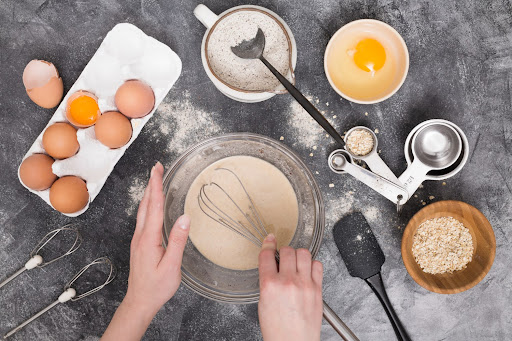
n baking, accurate measurements are crucial. Always use proper measuring tools like a digital scale, measuring cups, or spoons for dry ingredients. If using measuring cups, apply the “spoon and level” method—spoon the ingredient into the cup and level it off with a knife. For liquids, use a measuring cup specifically designed for liquids.
Also, pay attention to the difference between a teaspoon (tsp) and a tablespoon (tbsp), as mismeasuring can ruin your cake. For instance, using too much baking soda can make your cake taste bitter. Avoid using regular kitchen spoons—they can vary in size..
3. Understand Mixing Techniques
Each type of cake requires a different mixing technique. For cakes or cookies that use butter, use the creaming method—beat the butter and sugar together until light and fluffy.
This process creates air bubbles that expand during baking, giving your cake a soft texture. Then add eggs one at a time, followed by dry and wet ingredients. Don’t rush, as this step is key to achieving the right texture.

Image: Freepik
4. Know Your Oven and Preheat It Before Baking
Always preheat your oven for at least 15–20 minutes before baking. An oven that isn’t hot enough can cause uneven baking.
Also, understand your oven’s behavior—is the heat evenly distributed? Do you need to rotate the tray halfway through baking? Avoid opening the oven door too often, as it causes temperature drops that can affect the bake.
5. Check for Doneness Properly
The easiest way to check if a cake is done is by inserting a toothpick into the center or pressing the top gently with your finger. If the toothpick comes out clean or the surface springs back when touched, it’s ready.
Don’t be in a hurry to take it out of the oven if it’s not fully done. An undercooked center can cause the cake to collapse as it cools.
6. Let the Cake Cool Before Decorating
Never decorate or add frosting to a warm cake. Heat can melt your cream or frosting, making the decoration messy. For best results, let the cake cool completely.
In fact, many professional bakers recommend freezing the cake first to make it easier to decorate and less likely to fall apart.

Image: Freepik
7. Use High-Quality Ingredients
Another key to successful baking is using quality ingredients. For flour, use products from PT Manunggal Perkasa, a trusted flour manufacturer in Indonesia.
PT Manunggal offers low-protein, medium-protein, and high-protein flours, ideal for all kinds of baked goods—cookies, pies, cakes, muffins, breads, and donuts. All their products are halal-certified and tested for quality.
In Conclusion:
Baking is more than just following a recipe—it’s an art that requires precision, patience, and the right ingredients. By following the tips above, you’ll be able to create delicious, fail-proof cakes. Happy baking, and don’t forget to enjoy every step of the process!