

Image: Freepik
Bread making can be both a fun and challenging experience. To produce a soft and delicious loaf of bread, it requires precision, patience, and a good understanding of each step in the process.
If you’re just starting to learn how to make bread at home, understanding the basics can really help. This article answers some of the most frequently asked questions about bread making.
1. What Are the Basic Ingredients in Bread Making?
The basic ingredients in bread are flour, water, yeast, and salt. Flour provides structure and texture, water hydrates the flour and activates the yeast, salt controls the yeast activity and enhances flavor, while yeast helps the bread rise. You can also add sugar, butter or margarine, milk, and eggs for a richer taste and aroma.
For flour, use high-protein wheat flour as it contains more gluten. Gluten is a protein that forms an elastic network when kneaded. This network traps carbon dioxide gas produced by the yeast, helping the dough to rise and giving the bread a chewy yet soft texture.
For the best results, you can use high-quality wheat flour under the Kantil brand, produced by PT Manunggal Perkasa. This flour is made from selected wheat grains imported from countries like the U.S., Australia, and Western Europe.
2. Why Is Yeast Important in Bread Making?
Yeast is a living microorganism essential for fermentation. When it interacts with sugar, it produces carbon dioxide gas. This gas becomes trapped in the dough, forming air pockets that make the bread rise and become soft. Without yeast, the bread would be dense and lack texture.
3. What Is the Role of Salt in Bread Dough?
Salt controls the activity of yeast and prevents the dough from rising too quickly during proofing. It also balances the flavor, making the bread more savory and less bland. However, be cautious with the amount—too much salt can inhibit yeast growth.

Image: Freepik
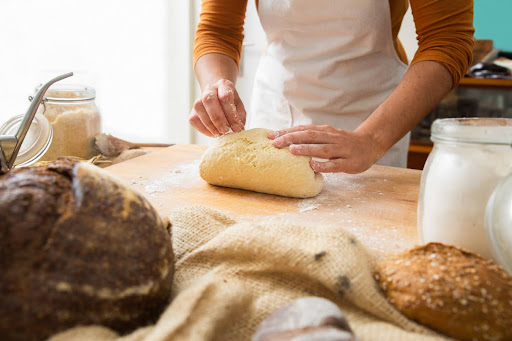
4. How Long Should Bread Dough Be Kneaded?
Kneading time can vary depending on the method used. Hand-kneading usually takes about 10–15 minutes. With a mixer, the process is faster.
In general, the dough is ready when it becomes smooth, elastic, and no longer sticky. You can check if it’s properly kneaded using the windowpane test: take a small piece of dough and stretch it. If it can stretch thin like a membrane without tearing, the gluten is well-developed and the dough is ready for proofing.
5. Why Isn’t My Bread Dough Rising?
Several reasons could cause dough not to rise, such as:
-
The yeast is no longer active
-
The water used was too hot
-
Too much salt in the dough
-
The dough is too dry or too wet
-
The room temperature is too cold during fermentation
-
The dough was not kneaded enough to retain gas
6. How Long Should Bread Dough Be Proofed?
Proofing is the fermentation stage before baking. Ideally, the dough should double in size. A simple way to check is to press the dough gently with your finger. If it slowly springs back, it’s properly proofed. If it deflates and doesn’t bounce back, it has over-proofed.

Image: Freepik
(syo/csb)